Lip Aftercare

Welcome to our lips aftercare page. We have designed this page to help our clients better understand the lip healing process and to address common client questions and concerns. Having the right expectations, following instructions, and understanding the healing process, will help you achieve your best results.
727-213-8811 Call or Text
Mon-Sat 10-5p
1. Expectations for Lips
Understanding the healing process helps set realistic expectations and reduce dissatisfaction. Your 8 weeks of healing will go through several normal stages before revealing your final 1st session results.
What is normal/common?
- Swelling (especially the first 48 hours after the service).
- Darker color initially.
- Dryness or tightness. (Staying hydrated helps in healing.)
- Itchiness (do not scratch).
- Flaking/Peeling. (Do not pick at them.)
- Ghosting - Color disappearing after flaking/peeling.
- Cold sores - If you have the Herpes Simplex Virus.
- A wide range of healing results after the 1st session.
- Less predictable healing than body tattoos.
Possible Results (1st Session)
Don't expect your first session to heal perfectly. Possible first session results include:
- Healed ideally. (Unusual)
- Healed Light to very light. (Normal)
- Pigment disappeared/Didn't take. (Fairly Common)
- Too dark. (Rare)
- Some patchiness (Common)
- Some unevenness (Common)
Don't worry. These are normal results for the first session since your lips are trying to push out a foreign pigment. Basically your first session is a little unpredictable and the touch-up will usually give better and more predictable results since your skin has acclimated to the pigment.
8-Week Touch-Ups
Don't expect your first session results to heal perfectly. Most clients will need at least 2 sessions to achieve their desired results. Expect to get an 8-week touch-up.
Why the Touch-Up is Recommended:
- Pigment Acclimation - In general, you can expect better and more predictable results with the touch-up because your skin has acclimated to the pigment and is less likely to try to reject the pigment.
- Personalized Adjustments - Everybody heals differently based on their skin type. Our techs can take a look and see how your lips healed and make precise adjustments for optimal pigment retention, shape, color, and symmetry.
- Extended Life - The touch-up significantly extends the life of your permanent makeup by building a stronger foundation of pigment.
2. LIp Aftercare Instructions
Please follow these instructions carefully to ensure the best healing and color results for your lips.
First 10 Days
1. Keep Clean
- Keep your lips clean to prevent bacteria and infection. Always wash your hands before touching your lips.
- Clean your lips gently twice daily using damp cotton pads with sterile water, ie. distilled water, bottled water, or boiled water that has been cooled to room temp. Note: Do not splash water directly.
- lf your lips get wet accidentally, gently pat dry with a clean tissue. Do not rub.
2. Moisturize Regularly
- Apply the provided healing balm, typically Aquaphor, using a clean cotton swab (Q-tip).
- Keep your lips lightly moisturized at all times. Do not let them dry out.
3. Avoid Contamination
- No makeup on or near the lips for at least 5 days.
- No spicy or salty foods for 3 days.
- Drink through a straw for 3 days.
- No kissing for 5 days.
- Avoid facials, skincare, or beauty treatments for at least 5 days
Days 1-14
- Avoid sun exposure, tanning, Jacuzzis, saunas, steam rooms, salt water, chlorinated pools, and direct shower spray.
- Do not bleach, wax, or perform electrolysis or laser hair removal near your lips.
- Avoid lip plumping products and lip fillers/enhancements until fully healed.
Important Notes
Cold Sores / Herpes Simplex: lf you have a history of cold sores, take Acyclovir tablets or apply Zovirax cream 5 times daily for 1 week starting before your appointment. If an outbreak occurs, it typically begins around day 3 of healing. This is not caused by the tattoo. It is a natural viral response to trauma.
Healing Process:
- Immediately after your tattoo: color will appear bright and defined.
- Day 2-3: Lips may look darker.
- Day 3-5: Peeling/flaking begins. Color may ghost and look very light or temporarily disappear.
- Weeks 2-3: Color will soften and bloom into a natural shade.
- Healing time: approximately 14 days, but can vary depending on your immune system, stress level, and diet.
- Mild unevenness after healing is normal. Your touch-up appointment will perfect your results.
Lip aftercare Dos
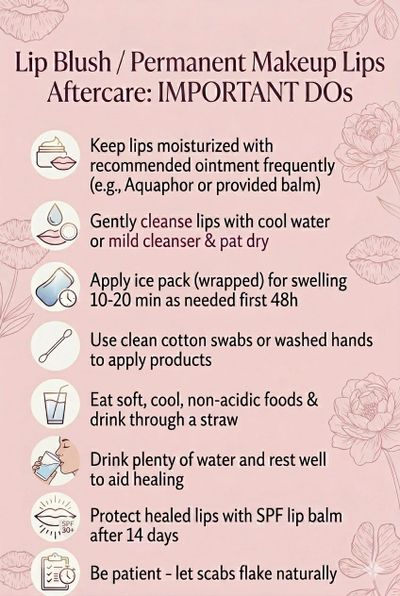
Keep lips moisturized with recommended ointment frequently:
Apply a thin layer of the provided aftercare balm or Aquaphor several times a day (especially when lips feel dry or tight). Keeping the area moist prevents excessive dryness, cracking, and helps the pigment settle evenly.
Gently cleanse lips with cool water or mild cleanser & pat dry:
Use cool or lukewarm water and a gentle, fragrance-free cleanser to keep the area clean. Always pat dry with a clean tissue or paper towel — never rub.
Apply ice pack (wrapped) for swelling:
For the first 48 hours, apply a wrapped ice pack or cold compress for 10–20 minutes at a time as needed. This helps reduce swelling and discomfort.
Use clean cotton swabs or freshly washed hands to apply products:
Always use clean tools or thoroughly washed hands when touching or applying ointment to your lips to avoid introducing bacteria.
Eat soft, cool, non-acidic foods & drink through a straw:
Choose soft, bland, cool foods for the first few days. Avoid anything spicy, salty, acidic (citrus, tomatoes), or hot. Drinking through a straw helps minimize contact with the lips.
Stay hydrated and rest well:
Drink plenty of water and get adequate rest. Good hydration and rest support faster, healthier healing.
Protect healed lips with SPF lip balm after 14 days:
Once your lips are fully healed (usually after 2–3 weeks), protect the color by applying SPF 30+ lip balm daily. Sun exposure is one of the biggest causes of premature fading.
Be patient — let scabs flake naturally:
Light flaking or peeling is normal during the healing process. Do not pick, peel, or scratch. Allow everything to fall off on its own for the best color retention.
Lip Aftercare Don'tS
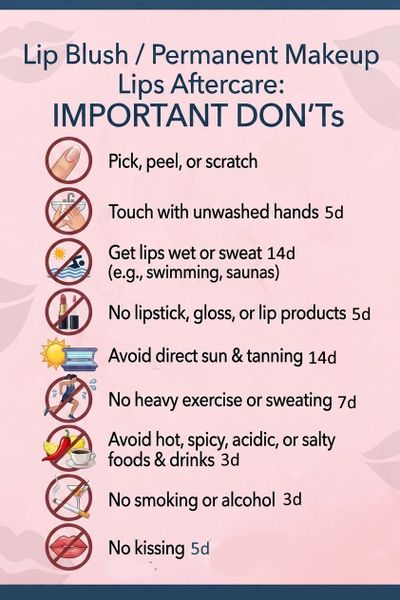
Pick, Peel, or Scratch:
Do not disturb the scabs that naturally form. Allow flakes to fall off on their own. Picking or scratching can lift the pigment before it has set, resulting in uneven color, patchy results, and potential scarring. Wait until the lips are completely healed (this takes about 4-6 weeks for full color to reveal itself).
Touch with Unwashed Hands:
Keep your hands away from your fresh lips. Always wash and sanitize your hands thoroughly before applying any recommended balm. Bacteria and oils from unwashed fingers can lead to infections or interfere with the pigment's healing. Be especially vigilant for the first 3-5 days.
Get Lips Wet:
Avoid all prolonged contact with water and moisture. This means no swimming in pools, oceans, or hot tubs, no saunas, and avoiding activities that cause significant sweating. Excess moisture can cause scabs to soften prematurely and potentially introduce bacteria. This precaution is crucial for at least the first 7-14 days.
No Lipstick, Gloss, or Lip Products:
Stay natural. Avoid using commercial lipsticks, colored glosses, or other non-prescribed products until the lips are fully healed. Chemical ingredients, fragrances, and pigments can cause severe irritation, affect the healed color, or even cause an infection. Stick only to the technician’s recommended balm for up to 4-6 weeks.
Avoid Direct Sun & Tanning:
Protect your new lips from UV rays. Direct exposure to natural sunlight and tanning beds can cause the sensitive skin to sunburn and lead to premature fading, discoloration, and unpredictable pigment healing. Use a sun hat when outdoors. After the first 2 weeks, transition to using a high-quality, lip-safe SPF (sunscreen).
No Heavy Exercise:
Take a break from strenuous physical activity. Intense exercise, heavy lifting, or any activity that increases body heat and forces significant sweating can expel the pigment from the skin before it is set. Plan to avoid heavy workouts for at least the first 7 days of healing.
Avoid Hot, Spicy, Acidic, or Salty Foods & Drinks:
Be mindful of your diet. Spicy foods, acidic ingredients like lemons, and very hot or salty foods/drinks can cause severe stinging, irritation, and inflammation on fresh, sensitive lips. Plan for bland, room-temperature foods for the first 2-3 days, and reintroduce other items very cautiously.
No Smoking or Alcohol:
Abstain from tobacco products and alcohol. Both smoking and drinking alcohol impair the body's natural healing ability by reducing blood flow and dehydrating the tissue. This can cause poor color retention, slow healing, and increased scabbing. Total avoidance is critical for the first 72 hours.
No Kissing or Lip Friction:
Protect your lips from physical stress. Avoid any form of passionate kissing, significant stretching of the mouth, or lip friction. Be very gentle when brushing your teeth. This can break scabs prematurely and disrupt the pigment, leading to patchy results and scarring. This restriction applies until all scabs have fallen off naturally and the surface is healed.
3. Stages of Lip Healing
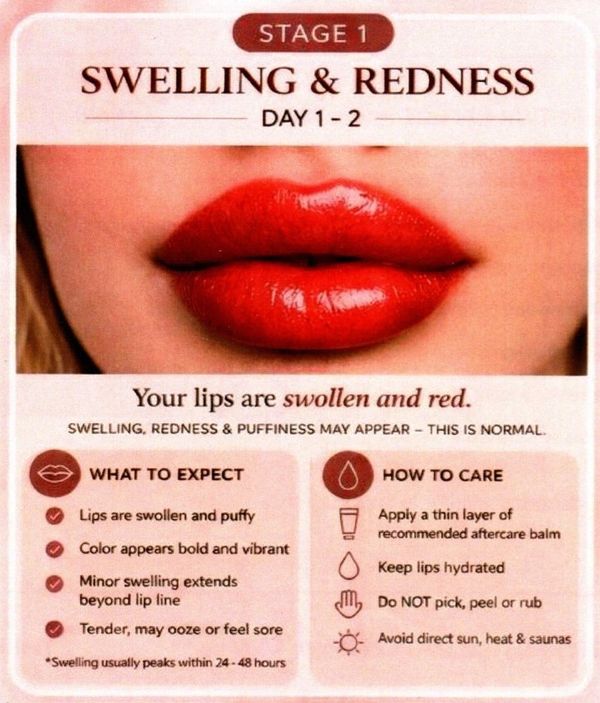
Stage 1: Immediately After
Immediately after your lip blush procedure, it is completely normal for your lips to appear swollen, puffy, and intensely red. The color will look bold and vibrant — often darker or brighter than the final result. Minor swelling may extend slightly beyond the lip line, and your lips may feel tender or sore.
This is your body’s natural inflammatory response and a sign that healing has begun. Swelling typically peaks within the first 24–48 hours and then starts to subside.
Tip: Keep lips continuously hydrated with the recommended aftercare balm, avoid picking or rubbing, and stay out of direct sun, heat, and saunas.
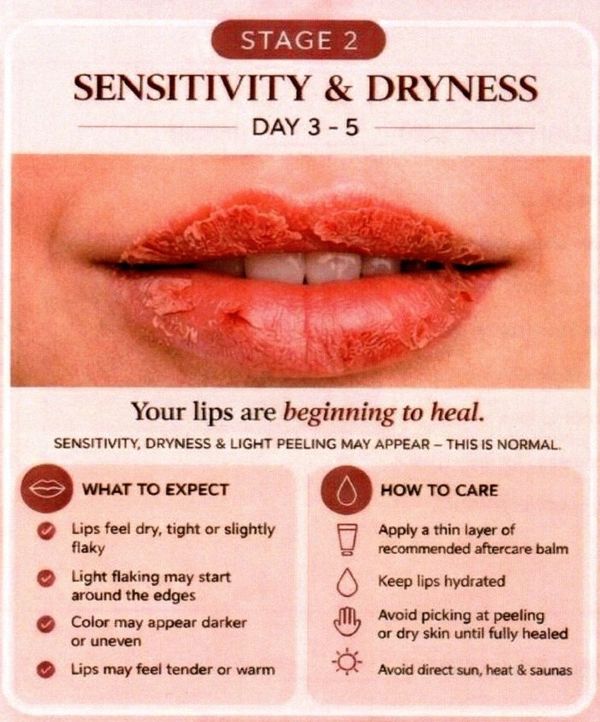
Stage 2: Flaking
Your lips are now in the early healing phase. Swelling decreases significantly, but you may experience dryness, tightness, light flaking or peeling (especially around the edges), full flaking and color loss, and/or increased sensitivity. The color may appear uneven or temporarily darker in some areas.
This stage is part of the normal healing process as the top layer of skin renews itself. Do not pick or peel the flakes — let them fall off naturally to protect the pigment underneath.
Tip: Continue applying a thin layer of aftercare balm as needed, keep lips well hydrated, and avoid exfoliating, direct sun, heat, or saunas.
Note: Cold sores may develop during this stage if you have the herpes simplex virus. If you get cold sores,
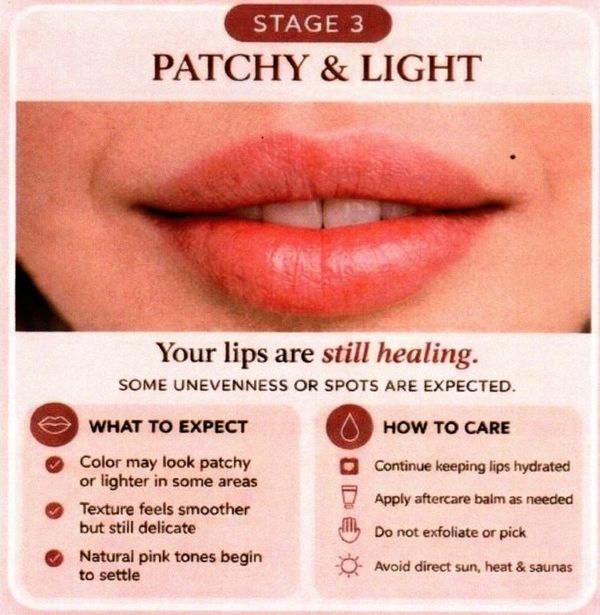
Stage 3: After Flaking
During this stage (1-8 weeks), your swelling will likely be gone and your lips may look patchy, lighter in some areas, or even uneven in color. Some spots may appear almost faded while others retain more pigment. This is very common and temporary.
After the outer layer has finished flaking/peeling, your color may look "ghosted" or disappeared like nothing was done or like the pigment didn't take. Don't worry. This is normal.
The pigment is still settling beneath the surface as the skin continues to heal and regenerate. Natural pink tones begin to blend with the implanted color, and texture starts to feel smoother, though lips remain somewhat delicate.
Tip: Stay consistent with hydration using your aftercare balm. Continue avoiding picking, exfoliating, sun exposure, and harsh products.
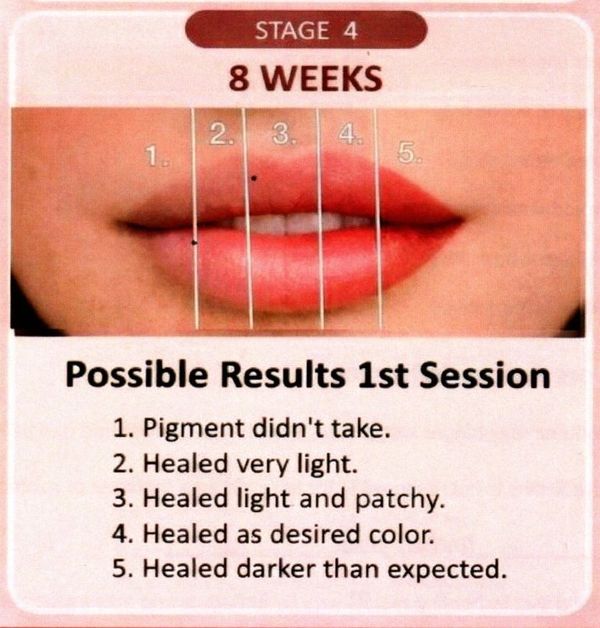
Stage 4: Finished
By week 8, your lips should be fully healed, revealing your final lip blush color. Every client heals differently, so results after the first session can vary greatly:
- Pigment may not have taken evenly
- Color may heal very light
- Color may heal light and patchy
- Color may heal exactly as desired
- Color may heal darker than expected
This is why we recommend a touch-up session (usually scheduled 8–10 weeks later) to perfect the shape, color, and evenness.
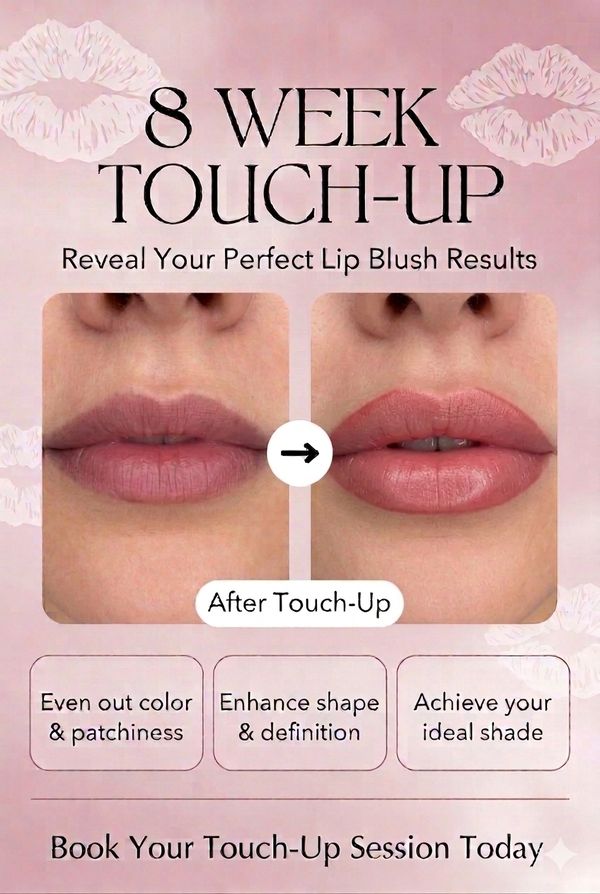
8-Week Touch-Up
Congratulations on completing your first lip blush session! Your lips have now fully healed and you’re seeing the results of your initial treatment.
It’s very common for the color to heal lighter than expected, patchy, or even appear as if the pigment “didn’t take.” This happens because your lips naturally try to push out the pigment during the first healing process — since it’s not a natural part of your skin. The great news is that with the touch-up, your lips adapt and learn to retain the pigment much better, resulting in richer, longer-lasting color.
During your 8-week touch-up appointment, we will:
- Even out any patchiness and color inconsistencies
- Deepen the pigment for a richer, more vibrant result (especially if it healed light)
- Enhance shape, definition, and symmetry
- Fine-tune the shade to your perfect desired look
Most clients notice a dramatic improvement after their touch-up and are thrilled with how beautiful, even, and natural their final results look. This second session is truly what brings out the best outcome.
💕 Don’t worry if your lips look lighter or uneven right now — this is completely normal and very common. The touch-up is specifically designed to correct this and give you the gorgeous lips you wanted.
We recommend booking your touch-up 8 weeks after your first session for the best pigment retention.
Common Lip Concerns
Swelling
It is normal for lips to be swollen and hurt for a few days after the procedure. Some tips include:
- Cold compresses: Apply for 10–15 minutes at a time, several times a day. Use an ice pack, bag of frozen peas, or cool cloth wrapped in a clean barrier (never apply ice directly on the lips).
- Pain relief: Take Tylenol (acetaminophen) as needed for discomfort. Avoid aspirin or blood thinners unless approved, as they can increase swelling/bruising.
- Hydration: Drink plenty of water to help your body heal and prevent dryness.
- Sleep elevated: Keep your head raised with extra pillows at night to reduce fluid buildup.
- Rest & avoid triggers: Minimize talking, exercise, hot drinks, saunas, spicy/salty/acidic foods, alcohol, and caffeine for the first 48 hours.
- Aftercare: Keep lips clean and apply the recommended ointment or balm 3–5 times daily with a clean cotton swab. Gently rinse with warm water after eating.
- Optional extras: Many clients benefit from arnica tablets or gel for swelling and bruising. A non-drowsy antihistamine (like Claritin or Zyrtec) can also help.
Too light/didn't take/disappeared
The pigment will look dark at first. During the first couple weeks, the outer layer of the skin will flake off and ghosting will occur, in which the color will disappear or look very light. Don't panic. This is normal. The color usually comes back partially over time.
Note: For your first session, expect the color to heal light, very light, or like it didn't take. This is normal because your lips are pushing out the foreign pigment. Your touch-up results will normally be much better because your lips have acclimated to the pigment and they will retain pigment better.
Flaking/Peeling/Patchiness
Your skin will most likely flake/peel off during the first couple weeks. Don't worry. It is a normal part of the healing process. As they flake, they the skin tends to come off in small pieces and the color will look patchy. Although we try to educate clients about the healing process, it can hit them a little different when this peeling happens, but be assured that this is a normal process in permanent makeup. It doesn't look great during this peeling process. Be sure to keep them clean and let them go through the healing process.
Symmetry/Shape
The shape and symmetry may look great right after the procedure, but once the irritation/swelling subsides, the shape may be slightly off. Also, the shape can change slightly as it heals. If the shape or color isn't perfect, don't panic. That is what the touch-up is for. Symmetry and color corrections can be taken care of at the 8-week touch-up. Keep your lips clean for a couple weeks, then you can use some makeup until your touch-up.
Itchiness/Cream allergies
Some itchiness is normal after the procedure. If you are experiencing itchiness a week or more after the procedure, it may be caused by the healing cream. Try stopping the healing cream, typically Aquaphor, and trying using another brand like Cetaphil. We don't recommend Vaseline, but it could be used temporarily.
Cold sores
Cold sores are not that uncommon for lips that have had a permanent makeup procedure. It is caused by clients having the Herpes Simplex Virus. Clients may not even know they have the virus. They will eventually go away, but, unfortunately, you will experience discomfort for a while (3-14 days). Ice your lips and check with your doctor for antiviral medications.
Note: If you have any history of cold sores or know you have the Herpes virus, we recommend taking antivirals several days before your appointment.
Inside of lips are white
It's completely normal for the inside of the lips to appear white or pale right after a permanent makeup/lip blush procedure. This temporary whitening (often called blanching) is usually caused by the topical numbing agent used during the session, which constricts blood vessels to reduce bleeding and discomfort. This can make the lip tissue look paler or whiter for a short time.
Infection
It is very important that you follow the procedures we give you for keeping your skin clean during the first week of the procedure. Lips get exposed to a lot of bacteria, especially because we often eat. You want to minimize any bacteria penetrating the tattoo and getting infected by keeping them clean. If you think you may have an infection, contact us immediately at 727-213-8811.
Pigment reaction
Pigments nowadays are designed to be hypoallergenic and it is very rare to have an allergic reaction. Although we have never had a client have any serious reaction, it is still theoretically possible. If you think you are having a reaction, it may be the healing cream. Stop using the cream and try a different healing cream. Contact us immediately at 727-213-8811.
5. Lip Aftercare FAQ
